


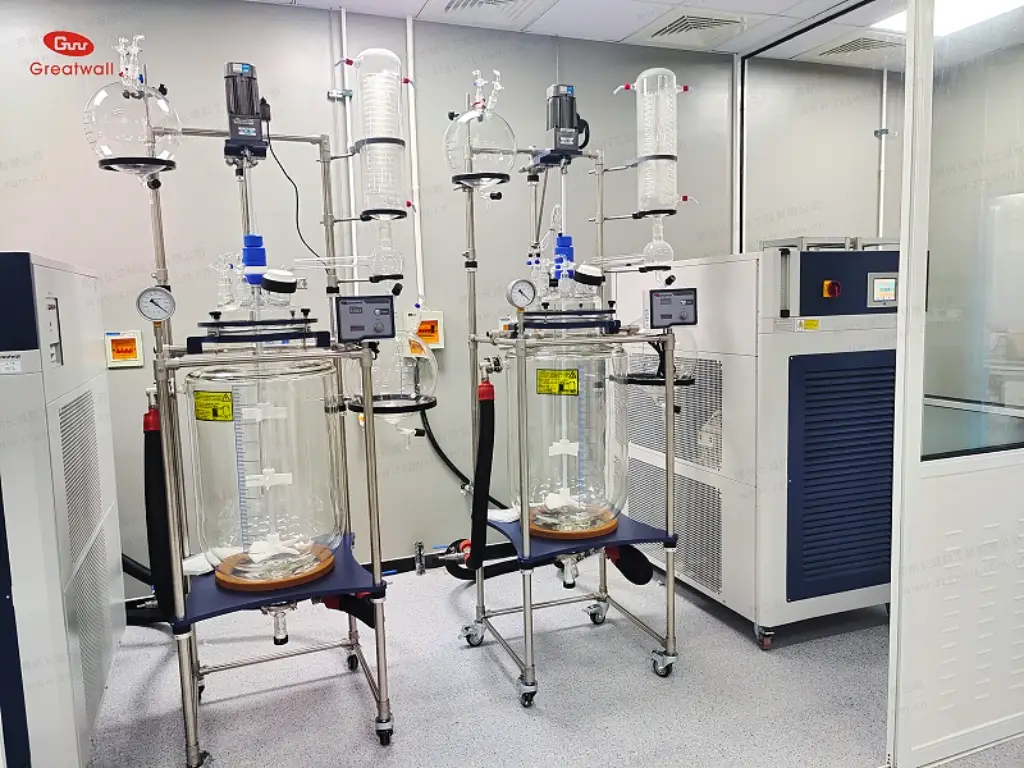

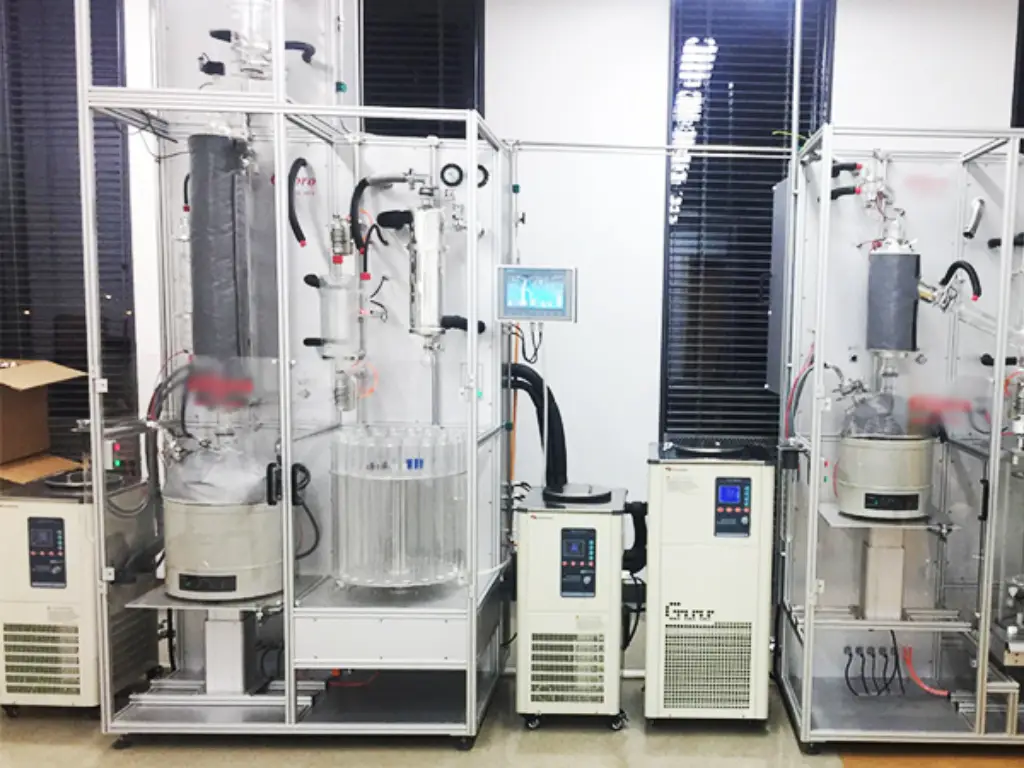
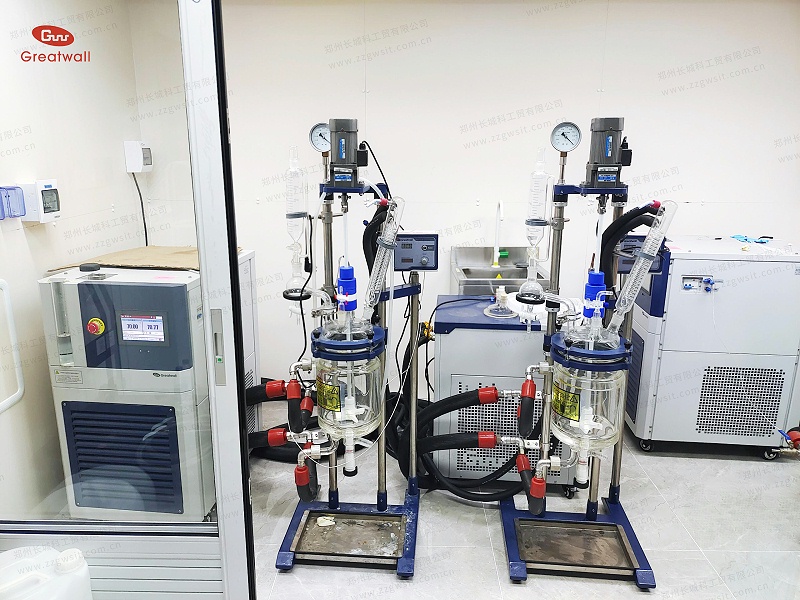


The recirculating chiller is one of the lab scientific instruments work with rotary evaporators and glass reactors.
Recirculating Chiller is a cooling water equipment that can provide constant temperature, constant current and constant pressure.
The function of Recirculating Chiller is to take away the heat generated by other equipment through relatively low temperature water, so as to keep the temperature of the equipment part at a level required for production.
Recirculating chillers is suitable for chemical, biological and physical testing experiments that need to maintain low temperature conditions.

Here is the truth:
The recirculating chiller can be used in combination with glass reactor, rotary evaporator, vacuum freeze-drying box, circulating water vacuum pump, magnetic stirrer and other instruments.
It has the function of providing low-temperature liquid and low-temperature water bath.
Here we list the main tips when choosing recirculating chiller.
Confirm the Temperature Range for Recirculating Chiller
This is easy to understand.
Different experiment test require different temperature.
As the main function of recirculating chiller is to cool down temperature.
The lower the temperature, the higher the recirculating chiller price will be.
Matching Equipment For Recirculating Chiller
Look:
You can combine Recirculating Chiller with different laboratory equipment such as glass reactor and rotavap, etc.
If you want to use it with a glass reactor, you need to confrim refrigerant for the jacket of the kettle body or to connect the condenser for condensation collection.
The Volume of Coolant for Recirculating Chiller
The larger the volume of coolant, the more coolant is installed, so the amount of cooling is greater, and its price is relatively expensive.
Recirculating Chiller Application Environment
This is important for the choice on recirculating chiller.
If the application environment is corrosive, you need to use a stainless steel cabinet for recirculating chiller and pay higher price.

Heating circulators is closed water-cooling high temperature circulator providing cooling water with constant temperature, constant current and constant pressure.
Heating circulators heat the materials in the supporting reaction vessel through the heat transfer fluid outputed by the circulating pump.
Heating circulators is suitable for jacketed reactor, chemical pilot reaction, high temperature distillation, semiconductor industry, etc.

Do you want to know what types of heating circulator to choose for your glass reactor?
Look:
Heating Circulator is mainly designed for glass reactor to make the synthetic reaction.
A reliable synthetic heating circulator supplier will confirm with you the following factors to help you find suitable type.
Glass Reactor Capacity
Here is the truth:
You need to know the capacity for your glass reactor when choosing heating circulators.
The larger capacity glass reactor will require larger flow for the heating circulator and you need to pay more money for it.
Instead, you just need to pay less if you choose a smaller one.
Temperature Range for Heating Circulator
This is another important factor about choosing heating circulator.
You should know what temperature degree you need before buying heating circulator.
The highest temperature for glass reactor is 200℃ and it is recommend to choose heating circulator meeting this temperature range.

Refrigerated Heating Circulator is a temperature control instrument that can perform cooling and heating functions.
The refrigeration and heating circulator mainly uses circulating heating and cold and heat, and the fully closed circulating pipeline reduces the contact area of the heat transfer medium and reduces the loss of heat transfer oil.
Refrigeration and heating circulators generally use heat transfer medium or refrigerant to perform refrigeration and heating cycles in pipeline circulation refrigeration and heating to achieve the temperature target change.
The refrigerating and heating circulator is a fully enclosed circulating line temperature control. It does not need to replace the heat transfer medium at high or low temperature, and can directly cool down at 300 degrees to reach the required temperature.
The operational performance of thermocontrol devices such as water baths or TCU temperature control units (TCUs) has an impact on the quality and accuracy of the experiments performed.
For example, in studies involving enzymes, a temperature change in the sample induces differences in the reaction velocities and thus the results become misleading. A thermostatic bath is used during incubations to stabilize temperatures enabling precise kinetic data to be generated.
On the same note, TCUs have a vital role in the provision of homogenous conditions during critical operations such as semiconductor tests or evaluating catalysts since any change in the conditions will greatly affect the performance. Taking into consideration the nature of the performed experiments it is obvious that thermal enclosure is an absolute necessity for consistent and trustworthy experimental evidence.
Precise Control for Evaporation: laboratory thermostats and water bath laboratory units allow constant temperature application which is essential for the rotary evaporators operation as it reduces overheating or overcooling tendency which may distort the end product.
Stable Reaction Conditions: The utilization of temperature control equipment ensures that glass reactors operate under optimal and specified reaction conditions which increases the yield as well as the quality, of chemical products.
Improved Reproducibility: Every Scientist aims to achieve cut-throat results and controlled temperature equipment has also allowed everyone to have more or less the same resuts because temperature difference or variation is reduced.

 English
  Spanish
  German
  French
  Dutch
Dutch  Italian