Food Industry
To enhance the economy’s wellbeing, the food industry is important. Its significance lies in providing safe, nutritious and delicious food that people need for better living. This sector is revitalized by constant food technology innovations, bringing about modernization and transformation to the entire industry.
The most important thing as food processors is ensuring quality and safety of our products. Our advanced food lab equipment guarantees that products meet national food safety standards while satisfying consumer demands.
Essential Food Testings for Safety and Compliance

Detection of Food Additives
Also among these are preservatives, antioxidants, artificial colorants and other additives used which are tested for accordingly using prescribed methodologies that check for compliance with national food safety standards.
For example benzoic acid has a maximum limit of 1g/kg according to regulations thus ensuring that all additives are in conformity with legal thresholds.
It is important both in terms of keeping the foods safe and legal.

Nutrition Analysis of Foods
Food composition tests analyze nutritional components like proteins, fats, and carbohydrates to confirm that the contents conform to the declared label and quality requirements.
For example, in protein content determination, experimental results should be within a ±5% deviation from the label claim to provide reliable and accurate information about the food's nutrients value.

Testing Shelf-life
Microbial analysis as well as accelerated aging testing is performed to assess shelf life of food products.
The number of microorganisms should not exceed 10^5 CFU (colony-forming units)/g during shelf life according to test standards, while sensory rating will evaluate any significant alteration in taste, texture or overall quality.
This ensures the safety and high quality of stored food throughout its planned shelf-life under proper storage conditions.
Key Experimental Conditions in Food Industry Testing
Temperature Control
Food component analysis and shelf life testing both depend on temperature. Results must be repeatable and accurate, which is why tests can only be done in a controlled temperature environment. For instance, if the temperature changes even a bit, some nutrients will become unstable, so this may influence what was expected.
Sterile Handling
In order to ensure that results are not biased by outside contamination during microbial analysis and shelf life studies, it is important to maintain sterile conditions. If there were any contaminants present at all then the reliability of the microbial count would be compromised making safety assessments inaccurate.
Sample Uniformity
In sensory evaluation experiments and component analysis alike, sample uniformity is essential. Reducing variation among each sample ensures that it's an accurate representation of the population preventing biased results from being produced hence wrong deductions about product quality may occur.
Precision Measurement
High-precision measurement equipment should be used when testing for food additives. The ability to accurately detect whether or not additive levels meet regulatory standards ensures consumer health protection regulations are adhered to as well as compliance with legal stipulations.
Empowering Food Testing Labs with Cutting-Edge Equipment
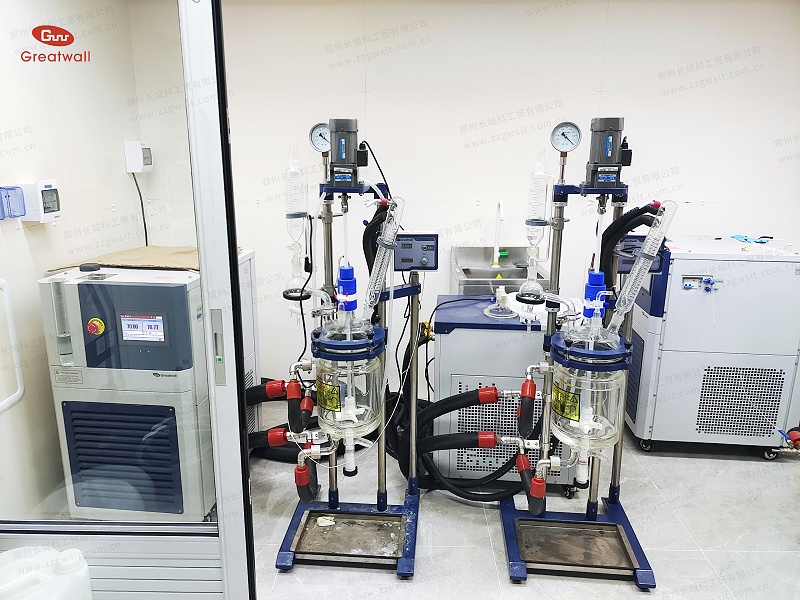
Glass reactor systems are widely used in the food industry, most notably in areas concerning fine chemicals, natural product extraction and manufacture of food additives. Some common application scenarios and advantages include:
Advantages of Glass Reactor Systems in the Food Industry
For the food quality assurance in scientific research, there is a need for exact test conditions and efficient reaction mechanisms. This has made GWSI jacketed reactor fabrication popular among researchers and producers in food industry due to their great performance.
Sealing and explosion-proof
Standardly our GWSI chemical reactors are explosion-proof. In addition, our glass reactors have excellent sealing properties achieving 0.095Mpa vacuum degree hence ensuring minimum contamination, loss and preventing safety accidents like glass damage and chemical leakage effectively.
High Visibility
Reactor glass material allows changes in color, precipitate formation and other phenomenon to be observed during the course of any reactions. GWSI reactors are capable of being raised, lowered or tilted to allow for multiple angle real-time monitoring on progresses in reactions.
Vacuum operation
The action of the vacuum pump is to lower the boiling point of the reaction system making it easy for the reaction process and rapid removal of volatile substances. Optional vacuum pump together with cold trap creates a steady low pressure environment which speeds up solvent removal and product concentration, thus improving experimental efficiency.
Mild reaction conditions
For one, high borosilicate glass has excellent chemical inertness against acids and more, making it possible for reactions to take place over a wide range of temperature. This can prevent the high temperatures from damaging heat sensitive substances.
How GWSI’s One-stop Reactor Solutions
Take Your Lab Work to a Higher Level

Glass reactor systems can efficiently extract essential oils (e.g. lavender oil, lemon oil), plant pigments (chlorophyll, anthocyanins for instance) and natural antioxidants (vitamin E or polyphenols) that act as natural flavors and add nutritional value to foods.

Our reactor systems are used to fractionate volatile food components such as aroma components; to purify impurities in food like pesticide residues, thus guaranteeing the safety of food.

The system enables the development of new food formulations such as functional foods and health foods, and also helps improve taste quality of various dishes satisfying consumers’ concern on healthiness and deliciousness.

Glass reactor vessels are utilized in pilot production of food additives; these reactors help validate new food products before they go into large-scale manufacturing steps thereby enabling commercialization of new products in future.
Rotary Evaporators: Powerful Tools for Food Industry
High-Efficiency Concentration
This is achieved by vacuuming the extraction equipment in combination with an evaporator, thus reducing extraction and concentration time to meet different experimental and production needs. The process also reduces sample oxidation during analysis which can make the sample invalid.
Versatile Application
It enhances accuracy of analysis, adapting to different experimental scenarios and offers a wide range of applications such as component extraction or additive separation in food testing experiments.
System Protection and Sterile Operation
GWSI rotovaps have two seals that guard it from external contamination meeting the stringent requirements of food safety testing labs. A cold trap efficiently traps volatile substances hence preventing pollution of vacuum pumps as well as lengthening its lifespan.
Precise Control
Temperature controlling devices from GWSI like Chillers and heaters help in maintaining evaporation temperature within defined limits that would preserve heat sensitive food components and prevent loss of quality.
Sustainable Food Testing: Efficient Solvent Recovery and Extraction with Rotary Evaporators
Food Component Extraction and Concentration
Separation and Purification of Food Additives
Solvent Recovery in Food Sample Testing
Handling Heat-Sensitive Food Components
For sensitive ingredients like vitamins and spices, the rotovap machine enables precise temperature control during extraction and concentration, preventing degradation and maintaining nutritional and flavor quality.